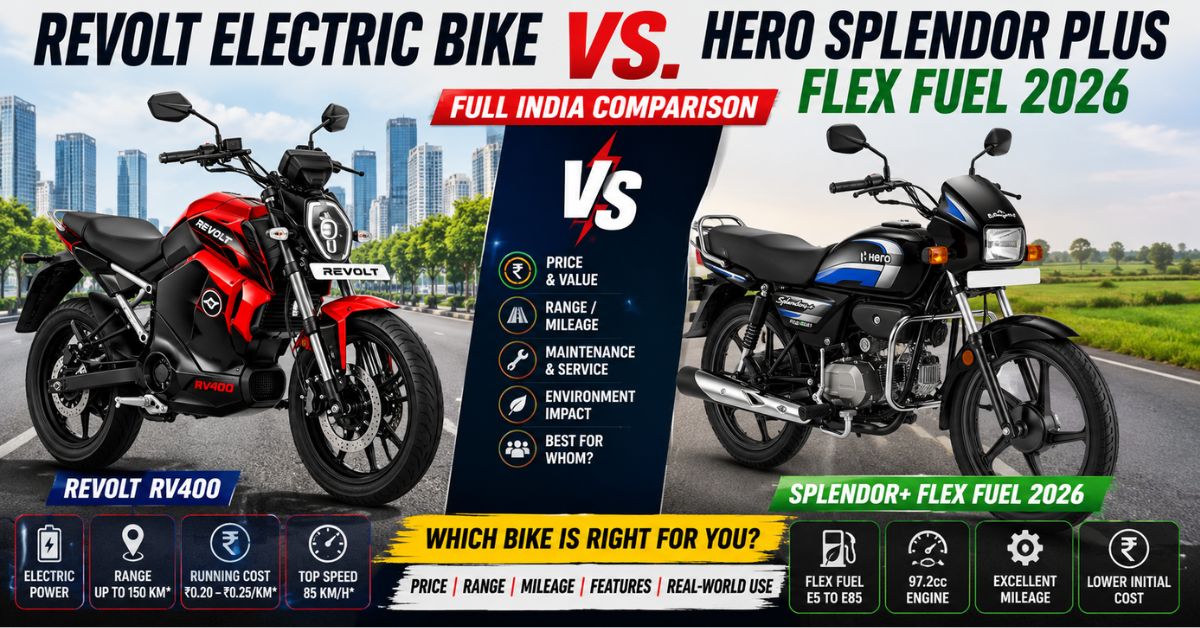
India’s two-wheeler market is changing fast. On one side, electric bikes like the Revolt Electric Bike Vs Hero Splendor Plus Flex Fuel 2026 RV400 are attracting city riders with low running costs and zero tailpipe emissions. On the other side, Hero MotoCorp has brought a new flex-fuel option with the Splendor+ Flex Fuel, which can run on ethanol-blended fuel from E5 to E85.
For Indian buyers, this comparison is not only about petrol versus electric. It is about daily use, charging access, fuel availability, ownership cost, resale trust, and long-term practicality. This article compares the Revolt Electric Bike vs. the Hero Splendor Plus Flex Fuel 2026 in simple terms so buyers can understand which option fits their needs better.
What Happened?
Revolt Electric Bike Vs Hero Splendor Plus Flex Fuel 2026 has introduced its first flex-fuel motorcycle range in India, including the Splendor+ Flex Fuel and HF Deluxe Flex Fuel. Hero says these motorcycles are compatible with ethanol-blended fuel from E5 to E85 and are developed at its Centre for Innovation and Technology in Jaipur.
At the same time, Revolt continues to be one of the better-known electric motorcycle brands in India. The RV400 remains a key electric bike for urban riders, offering a claimed range of up to 150 km under standard conditions with a 3.24 kWh removable lithium-ion battery.
This makes the comparison interesting because both bikes target Indian commuters but solve the fuel-cost problem in different ways.
Revolt Electric Bike Vs. Hero Splendor Plus Flex Fuel 2026: Key Details
For this comparison, the Revolt RV400 is the most relevant model because it is one of Revolt’s popular electric motorcycles in India. It is designed mainly for city use and short-to-medium daily commutes.
The RV400 uses an electric motor and a removable battery setup. Revolt says the bike can deliver up to a 150 km range in controlled conditions. In practical use, Revolt’s own blog mentions city riding range can vary around 120 km to 140 km depending on traffic, riding mode, load, and riding style.
The biggest benefit of the RV400 is running cost. Revolt estimates a full charge cost of around ₹25 to ₹35, depending on electricity rate, and an approximate cost of ₹0.20 to ₹0.25 per km under ideal range calculation.
This makes it attractive for riders who travel daily and want to reduce petrol spending. However, the real ownership experience depends heavily on charging access at home or work.
Hero Splendor Plus Flex Fuel 2026: Key Details
The Hero Splendor+ Flex Fuel is based on the trusted Splendor commuter platform but updated to support ethanol-blended fuel. Hero’s official page says it is compatible with E5 to E85 fuel, which means it can run on petrol mixed with ethanol in different ratios.
The bike uses a 97.2 cc air-cooled, single-cylinder engine. Hero lists the Splendor+ Flex Fuel with 6.3 kW power on E85 fuel at 8000 rpm and 8.3 Nm torque at 6000 rpm. It also gets a 4-speed constant mesh gearbox, electric start, a USB charger, and a kerb weight of 113 kg.
Hero’s official page also mentions delivery starting from 30 July 2026 onwards and a special offer price valid till July 2026.
As per Times of India, Hero announced a ₹4,000 limited-period benefit, bringing the Splendor+ Flex Fuel price down to ₹78,710 from ₹82,710 ex-showroom. Buyers should still check the final city-wise on-road price at the dealership.
Price Comparison
The Hero Splendor+ Flex Fuel is clearly the more affordable option at the time of writing. Its ex-showroom pricing sits in the commuter bike range, while the Revolt RV400 is positioned as a higher-priced electric motorcycle.
BikeDekho lists the Revolt RV400 starting at around ₹1.39 lakh in India, while Hero’s flex-fuel Splendor is reported around ₹82,710 ex-showroom before the limited-period benefit.
This means the Hero has a lower entry cost, which matters a lot in India’s commuter segment. The Revolt can still make sense for riders with high daily running because the electric running cost is much lower.
Running Costs: Revolt Electric Bike Vs. Hero Splendor Plus Flex Fuel 2026 Electric Vs. Flex Fuel
This is where Revolt has a strong advantage. Electric bikes usually cost much less per km compared to petrol bikes. Revolt’s own calculation suggests the RV400 can run at around ₹0.20 to ₹0.25 per km under ideal conditions.
The Splendor+ Flex Fuel may reduce dependence on normal petrol when higher ethanol blends are available. But the actual running cost will depend on ethanol-blend fuel price, local fuel availability, and real-world mileage. At present, E85 availability is still not as common as petrol or E20 fuel across India, so buyers should not assume E85 will be easily available everywhere.
For daily riders in cities with home charging, Revolt may save more money in the long run. For riders in small towns or rural areas where charging or service support is limited, Splendor Flex Fuel may feel safer and easier to manage.
Range, Mileage and Daily Practicality
The Revolt RV400’s claimed range is up to 150 km, while practical city range may be lower depending on riding mode and conditions. For a daily commute of 30 km to 60 km, this is usually enough if the owner can charge regularly.
The Hero Splendor+ Flex Fuel does not need charging. It can be refuelled quickly like a normal motorcycle. This is a big practical advantage for users who travel long distances, live in areas with power cuts, or do not have private parking with charging access.
For office commuters in cities, Revolt feels modern and cheaper to run. For mixed city-village use, long-distance daily work or family use, the Splendor+ Flex Fuel may be more convenient.
Performance and Riding Experience
The Revolt RV400 offers instant electric response, automatic-style riding, and different riding modes. It is easier to ride in traffic because there is no gear shifting. This can be useful for young riders, delivery riders, and city commuters.
The Hero Splendor+ Flex Fuel keeps the familiar 4-speed manual gearbox. It feels like a regular commuter motorcycle, which many Indian riders already understand. Hero says the flex-fuel model delivers higher power and higher torque with E85 fuel compared to the regular setup.
So the Revolt feels more modern, while the Splendor feels more familiar.
Maintenance and Ownership
Electric bikes generally have fewer moving parts than petrol bikes. There is no engine oil change in the same way as for petrol motorcycles. This can reduce some regular maintenance costs.
However, electric ownership brings battery-related concerns. Buyers should check battery warranty, replacement cost, service center availability, and charging support before buying.
The Splendor+ Flex Fuel has a major advantage in brand trust and service network. Hero has a very wide presence in India, and Splendor is already one of the most trusted commuter names. Hero also mentions a 5-year or 70,000 km warranty for its motorcycles, whichever comes first, with terms and conditions.
For buyers who want simple ownership, Hero has the stronger comfort factor.
Why It Matters for India
This comparison matters because India is trying to reduce fuel imports and pollution in two different ways. Electric vehicles reduce petrol use directly. Flex-fuel vehicles support ethanol blending, which can help reduce crude oil dependence and support locally produced fuel.
Hero says its flex-fuel motorcycles can help reduce crude oil imports, support farmers, and lower carbon emissions compared to petroleum. The company also claims emission reductions for CO, THC, and NMHC on its flex-fuel page.
For India, both technologies are important. EVs are strong for urban mobility, while flex-fuel bikes may be easier to adopt in areas where charging infrastructure is still developing.
Which One Should You Buy?
Choose the Revolt electric bike if your daily travel is mostly within the city, you have home charging, and you want the lowest possible running cost. It is a better fit for modern urban commuting.
Choose the Hero Splendor Plus Flex Fuel if you want a lower purchase price, easy refueling, wide service support, and familiar commuter bike ownership. It is better for buyers who want practical use without depending on charging.
The simple answer is this: Revolt is better for low running cost, while Hero Splendor+ Flex Fuel is better for easy ownership and wider practicality.
What Happens Next?
The next big thing to watch is fuel and charging infrastructure. For Revolt and other EV brands, more charging access and better battery confidence will help adoption. For Hero’s flex-fuel bikes, the real success will depend on how easily E85 or higher ethanol-blend fuel becomes available across India.
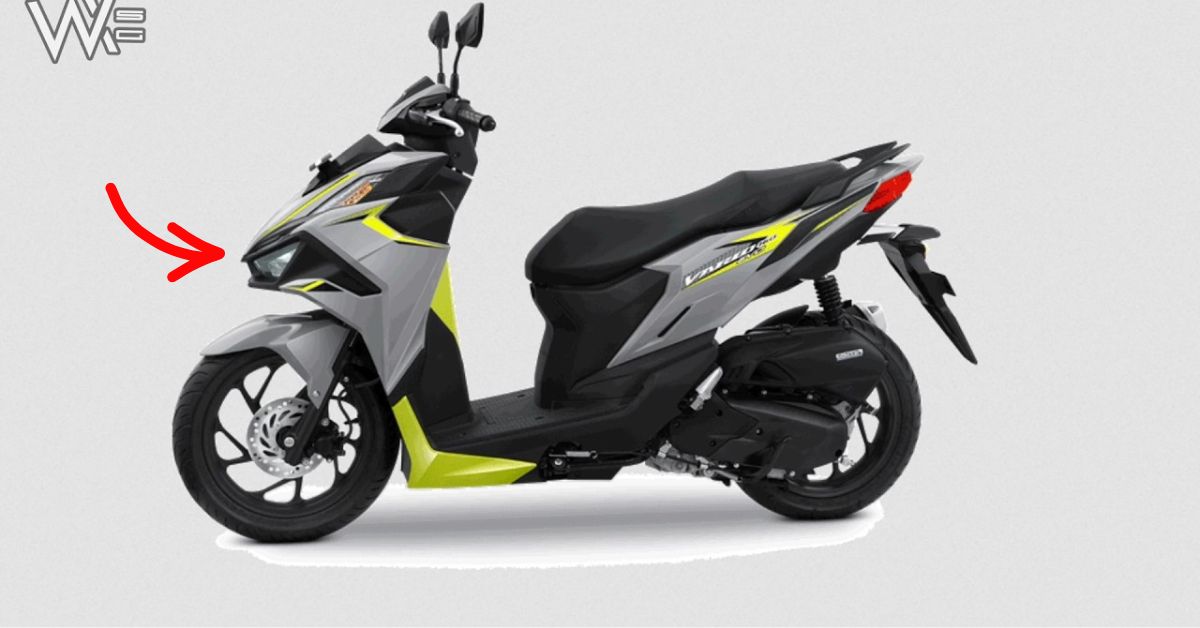
Read More: Honda Vario EVO 160 ABS 2026
Hero’s official page says deliveries for its flex-fuel motorcycles start from 30 July 2026 onwards. Buyers should check with local Hero dealerships for booking, final on-road price, and delivery timelines.
FAQs (Revolt Electric Bike Vs. Hero Splendor Plus Flex Fuel 2026)
Is Revolt electric bike better than Hero Splendor Plus Flex Fuel?
Revolt is better for riders who want very low running cost and have charging access. The Hero Splendor Plus Flex Fuel is better for buyers who want easy refueling, a lower price, and wider service support.
What is the range of Revolt RV400?
Revolt claims up to a 150 km range for the RV400 under standard conditions. In real city use, range may vary depending on mode, traffic, load, and riding style.
What fuel does Hero Splendor Plus Flex Fuel use?
Hero Splendor+ Flex Fuel is compatible with ethanol-blended fuel from E5 to E85, according to Hero’s official page.
Is E85 fuel available everywhere in India?
E85 availability is still not common everywhere. Buyers should check local fuel stations before depending on higher ethanol blends.
Which bike is cheaper to buy?
Hero Splendor Plus Flex Fuel is cheaper to buy than the Revolt RV400. However, Revolt can be cheaper to run if used regularly with home charging