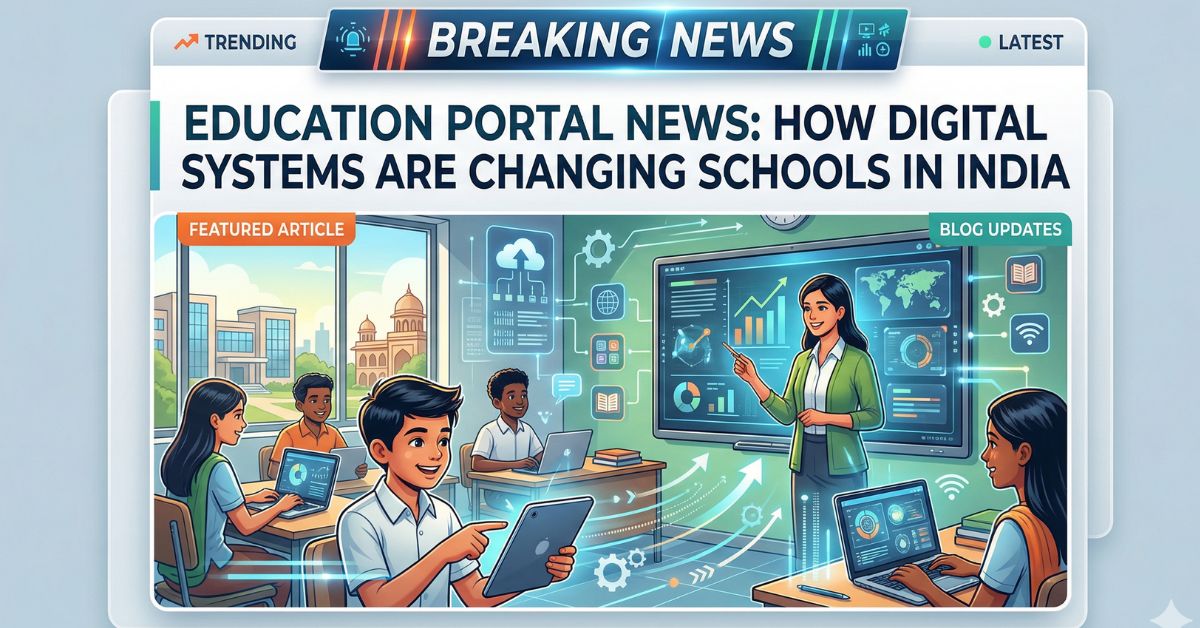
India’s education system is rapidly going digital, and “education portal” has become a trending topic among students, teachers, and job seekers. From school management to teacher recruitment and student records, these portals are changing how education is managed across states.
In this article, we explain what an education portal is, the latest updates in India (especially Madhya Pradesh), how it works, and why it matters for students and teachers.
What Is an Education Portal?
An education portal is an official online platform created by government education departments to manage school-related data and services digitally.
These portals are designed to handle tasks like student enrollment, attendance, teacher records, exams, and administrative work in one place. Many Indian states now have their own portals under the Digital India initiative.
For example, platforms developed with support from the National Informatics Centre (NIC) aim to provide easy access to education services across the country.
Latest Update: Education Portal 3.0 in Madhya Pradesh
One of the most discussed updates is the launch of Education Portal 3.0 by the Madhya Pradesh School Education Department.
This upgraded system started for the 2025–26 academic year and replaced older systems like Education Portal 2.0.
Key Highlights
- Covers more than 45,000 schools across the state
- Combines student, teacher, and school data into one platform
- Includes modules for guest teacher recruitment and tracking
- Provides real-time monitoring of academic activities
The portal helps manage everything from student admission to teacher assignments through a single dashboard.
How Education Portals Work
Education portals work as centralized digital systems. Schools, teachers, and government officials log in to perform their tasks.
Check out more: MBA CET 2026
Main Functions
Most portals across India offer similar features:
- Student registration and academic records
- Teacher data management and transfers
- Attendance tracking
- School infrastructure and data reporting
- Online services like certificates and admissions
For example, national-level systems like UDISE+ collect school data to help in policy planning and development.
Why Education Portals Are Important
Education portals are not just websites—they are part of a larger digital transformation.
1. Reduces Paperwork
Schools no longer need to maintain bulky records manually. Most work is now done online.
2. Improves Transparency
Teacher recruitment, transfers, and school data are more transparent and trackable.
3. Faster Decision-Making
Officials can access real-time data to make better decisions for education policies.
4. Better Access for Students
Students and parents can check records, attendance, and results online.
Impact on Students and Teachers in India
The shift to digital portals has a direct impact on daily life in schools.
Students benefit from easier admissions, digital records, and faster services. Parents can track progress without visiting schools.
Teachers experience reduced administrative work and more clarity in transfers and postings. Guest teacher recruitment has also become more structured through dedicated systems.
In states like Madhya Pradesh and Maharashtra, portals are already managing millions of student records and thousands of schools efficiently.
Challenges and Concerns
While education portals bring many benefits, there are still some challenges:
- Internet access issues in rural areas
- Technical errors or login problems
- Need for training for teachers and staff
Government departments are working to improve these systems and provide better support.
What Happens Next?
India is expected to expand and improve education portals further.
Future updates may include:
- Integration with national education databases
- Mobile apps for easier access
- AI-based analytics for learning improvement
The focus is on making education systems more connected, transparent, and efficient across all states.
Frequently Asked Questions (FAQs)
1. What is an education portal in India?
It is a government-run online platform used to manage school data, student records, and teacher information.
2. Who can use the education portal?
Students, teachers, school administrators, and government officials can use it based on their login access.
3. What is Education Portal 3.0?
It is a new digital system launched in Madhya Pradesh to manage education data for the 2025–26 academic year.
4. Is the education portal available in all states?
Yes, many states have their own portals, but features may differ.
5. Can students access their records online?
Yes, most portals allow students or parents to view academic records and other details.