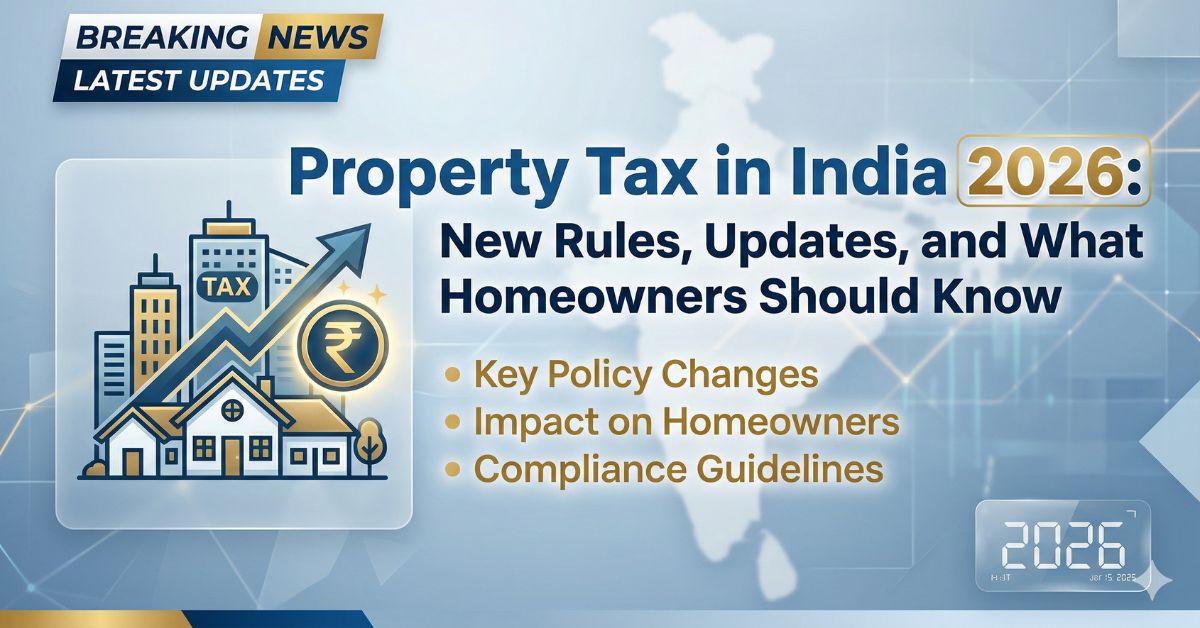
Property tax is one of the most important local taxes in India, yet many homeowners are still confused about how it works and what recent changes mean. In 2026, new tax rules, digital tracking, and stricter reporting have brought property-related taxation into sharper focus.
This article explains the latest updates around property tax, how it works in India, recent developments in 2026, and what it means for property owners and buyers.
What is Property Tax in India?
Property tax is a tax paid by property owners to local municipal authorities. It applies to residential, commercial, and land properties. The amount collected is used by city governments to maintain infrastructure such as roads, drainage, and public services.
Each city in India has its own method of calculating property tax. Factors usually include:
- Property location
- Size and type of property
- Usage (residential or commercial)
- Annual rental value or capital value
Latest Property Tax and Real Estate Updates in 2026
Recent developments in India show a shift toward stricter compliance and better monitoring of property-related transactions.
1. Increased Monitoring of Property Transactions
Under new Income Tax Rules 2026, high-value property transactions are now being closely tracked. For example, property deals or gifts worth ₹45 lakh or more must be reported by registrars to the tax authorities.
This move is aimed at improving transparency and reducing tax evasion in real estate.
Check out more: EU Parliament
2. Focus on Digital Tracking and Transparency
Authorities are moving toward digital systems to track property ownership, transactions, and tax payments. This includes better data sharing between municipal bodies and the Income Tax Department.
Experts say this shift will reduce under-reporting and help align property values with actual market rates.
3. Stricter Compliance for Taxpayers
The government is tightening rules to ensure taxpayers follow proper procedures. Recent changes indicate that tax cases will be decided based on facts rather than technical loopholes.
This means property owners must maintain proper documents, records, and payment proofs.
How Property Tax is Paid in India
Property tax is generally paid to the local municipal corporation, either annually or in two installments.
Typical deadlines in many cities:
- First half: Around September
- Second half: Around March
Late payments may attract penalties or interest charges.
Many cities now offer online payment systems, making it easier for citizens to pay taxes digitally.
Why Property Tax Matters More Now
Property tax is no longer just a routine payment. It has become a key part of India’s broader tax system and financial tracking.
Better Revenue for Cities
Municipal bodies depend heavily on property tax to fund urban development. Improved collection means better public services.
Crackdown on Black Money
With stricter reporting rules, authorities can track high-value transactions and prevent illegal property dealings.
Impact on Buyers and Sellers
Buyers and sellers must now be more careful with documentation, valuation, and disclosures to avoid penalties.
Impact on Property Owners in India
The recent changes mean that property owners should be more aware and proactive.
- Ensure timely payment of property tax
- Keep all property-related documents updated
- Report high-value transactions correctly
- Avoid undervaluing property deals
Failure to comply can lead to penalties, interest, or legal action.
What Happens Next?
India is expected to continue modernising its property tax system. Future changes may include:
- Fully digital property records
- Integration of property data with income tax systems
- More automated tax assessments
These steps aim to create a transparent and efficient real estate ecosystem.
Frequently Asked Questions (FAQs)
1. Is property tax the same across India?
No, property tax rates and calculation methods vary by city and municipal authority.
2. What happens if I don’t pay property tax?
You may face penalties, interest, and in some cases, legal action or property attachment.
3. Are new rules affecting property tax directly?
Most new rules focus on tracking property transactions and improving compliance, which indirectly affects property tax systems.
4. How can I pay property tax?
You can pay it online through your city’s municipal website or offline at designated offices.
5. Do I need to report property gifts?
Yes, especially if the value is high (₹45 lakh or more), as such transactions may be reported to tax authorities.