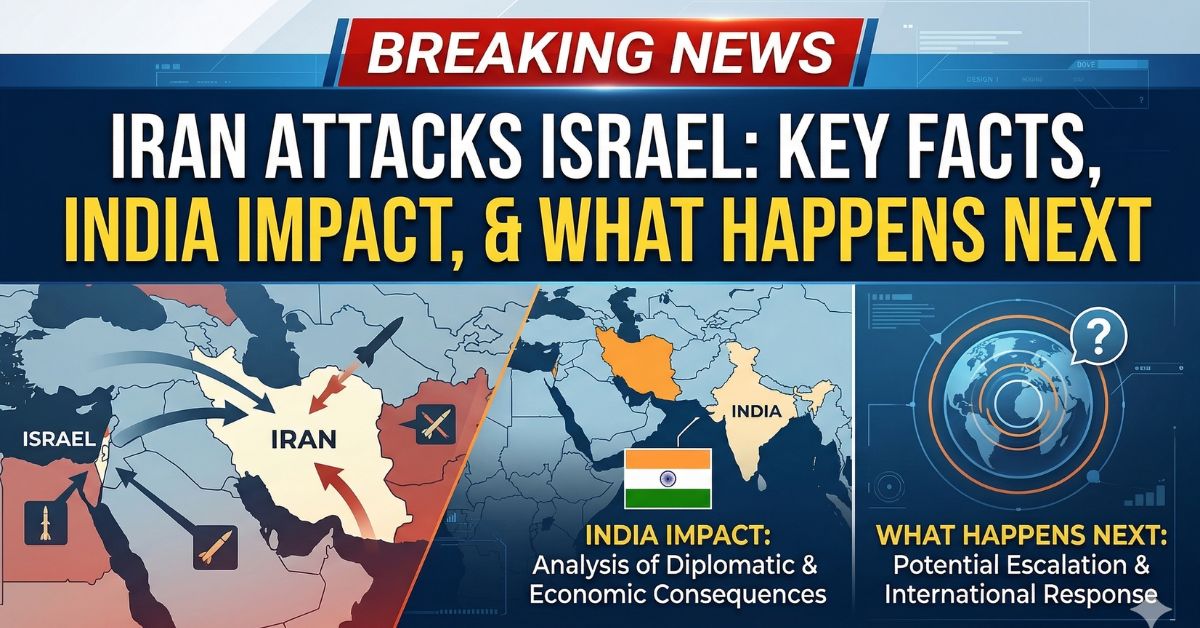
The keyword “iran attacks israel” is trending because the Iran-Israel conflict has entered a more dangerous phase, with fresh attacks, wider regional fallout, and growing concerns about oil, trade, and safety. For readers in India, the biggest questions are simple: what exactly happened, how serious is it, and why could it affect fuel prices, markets, and India’s foreign policy. Recent reporting and official statements show that the conflict is no longer just about direct military action. It is now affecting energy infrastructure, diplomacy, and economic stability across the region.
What happened in the latest Iran-Israel escalation
The latest phase of the crisis intensified after Israel struck Iran’s South Pars gas field on March 18, 2026, according to Reuters and multiple Indian news reports. After that, Iran responded with missile and drone attacks linked to energy and strategic targets in the region, while the wider conflict continued to raise fears of a deeper regional war. Reuters described the situation as part of an ongoing war that began on February 28, 2026, while Indian coverage has framed it as a major West Asia escalation with direct global consequences.
Another major concern came from the nuclear safety side. The IAEA’s event update said that a projectile struck the premises of the Bushehr Nuclear Power Plant on March 17, 2026, though no damage to the facility or injuries were reported at that time. Even without reactor damage, an incident so close to a nuclear site has added to the global alarm around the conflict.
Key details everyone is trying to understand
A large part of public interest is not only about whether Iran attacked Israel, but also how far the conflict has spread beyond direct strikes. Recent coverage shows that the war is now tied to attacks on gas and oil infrastructure, shipping risks near the Strait of Hormuz, and threats to regional energy flows. Reuters reported that this has already shaken global energy markets and triggered fears of more disruption if the conflict expands further.
There is also uncertainty around the military and political endgame. Israeli Prime Minister Benjamin Netanyahu said on March 19 that Iran no longer has uranium enrichment capacity, but IAEA chief Rafael Grossi disputed that claim and said Iran still retains nuclear capabilities. That difference matters because it shows how unclear the battlefield picture still is, even as leaders make strong public statements.
Background: why Iran and Israel are in direct conflict again
Iran and Israel have been long-time rivals, but the current confrontation has moved beyond the older pattern of shadow conflict, covert strikes, and proxy warfare. India’s Ministry of External Affairs said on February 28, 2026, that it was “deeply concerned” by developments in Iran and the Gulf, showing that the situation had already become serious enough for formal Indian attention well before the latest spike in attacks. Later, External Affairs Minister S. Jaishankar told Parliament that India had been monitoring the situation continuously since the 12-day war in June 2025, and had earlier advised Indian nationals to avoid non-essential travel to Iran.
This background helps explain why the trending keyword is getting strong attention in India. People are not searching only for the latest strike. They are also searching to understand whether this is a temporary exchange or part of a larger war that could reshape the region. Indian news coverage is heavily focused on live updates, military escalation, energy disruption, and India’s response, which shows that search intent is both informational and impact-driven.
Check out more: Saudi Arabia Riyadh Development
Why this matters so much for India
For India, the biggest issue is energy. India is one of the world’s largest oil importers, and any serious disruption in West Asia can quickly push up import costs, weaken the rupee, and increase inflation risks. Reuters reported on March 20 that the Indian rupee fell to a record low of 93.2750 per U.S. dollar as concerns over the Iran war and energy disruption deepened. The report also said foreign investors had pulled out more than $8 billion from Indian equities this month.
The pressure is not limited to currency markets. Reuters also reported that India’s auto sector is facing stress because of tighter gas supplies and wider supply-chain strain linked to the conflict. Some suppliers have already reduced production, and the report noted that the government has been working to secure alternatives while giving priority to household energy needs. That means a war far from India can still affect manufacturing, logistics, and prices at home.
This is why Indian readers are searching for the topic in large numbers. The concern is not only about war headlines. It is also about petrol and diesel costs, LPG availability, imported inflation, stock market weakness, and whether India may need to take extra diplomatic or economic steps.
India’s official response so far
India’s official line has focused on caution, diplomacy, and the safety of Indian nationals. The MEA’s February 28 statement said India was deeply concerned by the developments in Iran and the Gulf. In Parliament on March 9, EAM Jaishankar said Indian nationals had already been advised on January 5 to avoid non-essential travel to Iran, and residents there were asked to register with the Embassy and stay alert.
India’s concern has continued in recent days. A Rajya Sabha reply published on March 19 said the government remains committed to the safety and security of Indian nationals in West Asia and the Gulf. Indian media also reported on March 20 that Prime Minister Narendra Modi condemned attacks on energy infrastructure and pushed for de-escalation through diplomacy in conversations with multiple world leaders.
What the latest updates suggest
The latest updates suggest that the conflict is widening in impact even when the direct military targets change. Energy infrastructure has become a major pressure point. Reuters reported that attacks and counter-attacks linked to gas and oil sites have already influenced global energy markets. At the same time, the IAEA’s updates around Bushehr show why international agencies are worried about risks beyond ordinary battlefield damage.
It is also important to say clearly that some battlefield claims remain disputed. Governments and military leaders often make strong statements during war, but independent verification can take time. That is why official agency updates, regulatory bodies, and multi-source reporting matter more than viral social media claims in a situation like this.
What happens next
The next phase will likely depend on three things: whether direct attacks continue, whether more energy sites are hit, and whether major powers push hard for de-escalation. If strikes keep spreading to energy routes or infrastructure near the Gulf, the economic impact could grow quickly for countries like India that depend heavily on imported fuel. Reuters and AP both indicate that Asia is already feeling the pressure through energy supply fears and rising costs.
For India, the most important next steps are likely to be diplomatic engagement, protection of Indian citizens in the region, and efforts to reduce any immediate economic shock. That does not mean panic is necessary, but it does mean the conflict has become important for everyday Indian consumers and businesses, not just for foreign policy watchers.
Why the keyword is trending in India
In India, search intent around “iran attacks israel” appears to be driven by three things. First, readers want the latest update on the conflict itself. Second, they want to know whether the situation is becoming a full regional war. Third, they want to understand the practical India angle, especially oil prices, market impact, and official government advisories. This pattern is visible across Reuters, AP, MEA statements, and Indian publishers such as Times of India and other large outlets covering both the war and its economic effect.
FAQ
Did Iran attack Israel recently?
Yes. Recent reporting says Iran carried out retaliatory missile and drone attacks linked to the latest escalation in the Iran-Israel conflict, which intensified after Israel struck Iran’s South Pars gas field on March 18, 2026.
Why is this news important for India?
It matters because conflict in West Asia can affect oil and gas supplies, raise fuel costs, weaken the rupee, hurt markets, and disrupt supply chains for Indian industries.
Has India issued any official response?
Yes. India’s Ministry of External Affairs has expressed concern, advised caution for Indian nationals, and said the government is working to protect Indians in West Asia.
Is there a nuclear risk in this conflict?
There is concern, especially after the IAEA said a projectile struck the premises of the Bushehr Nuclear Power Plant on March 17, 2026. No damage to the facility or injuries were reported in that update, but the incident increased international concern.
Could petrol and diesel prices rise in India?
That risk exists if the conflict keeps disrupting energy supply routes or infrastructure. Reports already show pressure on oil prices, the rupee, and Indian industry.
Is all information about the war fully confirmed?
No. Some claims made by governments and military leaders remain disputed or only partly verified. It is better to rely on official agencies and multiple trusted reports instead of social media rumours.