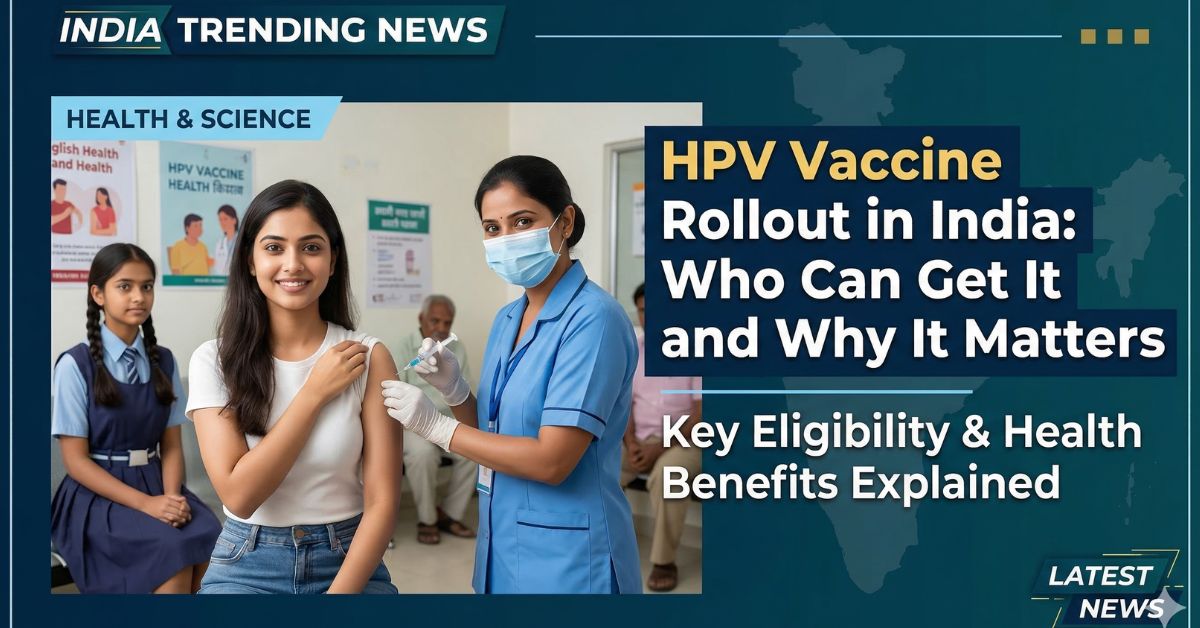
India is taking a major step in women’s health with the launch of the HPV vaccine programme. This vaccine helps prevent cervical cancer, which is one of the most common cancers among women in India. In 2026, the government started a nationwide campaign to provide this vaccine free of cost to young girls.
In this article, we explain what the HPV vaccine is, what the government has announced, why it is important, and what it means for people in India.
What Is HPV Vaccine and Why It Matters
HPV stands for Human Papillomavirus. It is a very common virus that spreads through skin contact. Some types of HPV can cause cervical cancer in women.
Doctors say that almost all cervical cancer cases are linked to HPV infection. The good news is that this cancer can be prevented with a vaccine if given at the right age.
In India, cervical cancer is the second most common cancer among women, with over 1.2 lakh new cases and around 80,000 deaths every year . This makes prevention extremely important.
India’s 2026 HPV Vaccine Rollout: Key Details
The Government of India officially launched a nationwide HPV vaccination programme on February 28, 2026.
Here are the key points:
- The vaccine is free at government hospitals and health centres
- It targets around 1.15 crore girls aged 14 years
- A special 90-day campaign is being run to ensure maximum coverage
- Girls turning 15 within this period are also eligible
The vaccine being used is a widely tested one that protects against the main cancer-causing HPV types. Studies show it can be over 90% effective in preventing cervical cancer .
What Is Happening on the Ground
After the national launch, states and cities across India have started vaccination drives.
Recent reports show:
- Lakhs of girls have already received the vaccine within weeks of launch
- Some districts are targeting tens of thousands of girls through school campaigns
- However, in some cities, participation is still low due to exams and misinformation
Officials are now focusing on awareness campaigns in schools and parent meetings to increase participation.
Background: Why This Programme Was Needed
Even though the HPV vaccine has been available in India for many years, it was mostly limited to private hospitals. The cost was high, sometimes reaching thousands of rupees per dose.
Because of this:
- Many families could not afford it
- Awareness was low
- Vaccination coverage remained very limited
Now, with the government providing it free, access is expected to improve across all sections of society .
Check out more: MHT CET 2026
Why This Move Is Important for India
This vaccination programme is being seen as a major public health milestone.
1. Prevention of a Major Cancer
Cervical cancer is one of the few cancers that can be prevented through vaccination. This makes the HPV vaccine extremely valuable.
2. Focus on Adolescent Health
Most vaccination programmes in India focus on small children. This is one of the first major programmes targeting teenage girls.
3. Women’s Health and Empowerment
Healthy women mean healthier families. The programme also supports the government’s broader focus on women’s well-being.
4. Global Alignment
India has joined over 160 countries that have already included HPV vaccination in their national programmes .
Challenges: Awareness and Misinformation
Despite the benefits, the rollout is facing some challenges.
- Many parents are unsure about vaccine safety
- Social media misinformation is creating fear
- School exams are delaying participation
Health experts have clearly said that the HPV vaccine is safe and well-tested, with only mild side effects like pain or fever in rare cases .
Impact on India’s Future
If the programme is successful, it could:
- Reduce cervical cancer cases drastically in the next 10–20 years
- Save thousands of lives every year
- Reduce healthcare costs related to cancer treatment
Countries like Australia have already shown that high vaccination coverage can almost eliminate cervical cancer.
What Happens Next
The government plans to:
- Continue the vaccination through routine immunisation programmes
- Expand awareness campaigns in schools and communities
- Monitor coverage using digital platforms
Experts say the next few months are critical for achieving high coverage.
FAQs
1. Who should take the HPV vaccine in India?
Girls aged around 14 years are the main target group under the government programme.
2. Is the HPV vaccine free in India?
Yes, it is free at government hospitals and vaccination centres under the national programme.
3. Is the HPV vaccine safe?
Yes, it is considered safe and has been used worldwide for many years.
4. Can HPV vaccine prevent cancer completely?
It can prevent most cases of cervical cancer caused by common HPV types.
5. Why is the vaccine given at a young age?
It works best when given before exposure to the virus, usually in early teenage years.