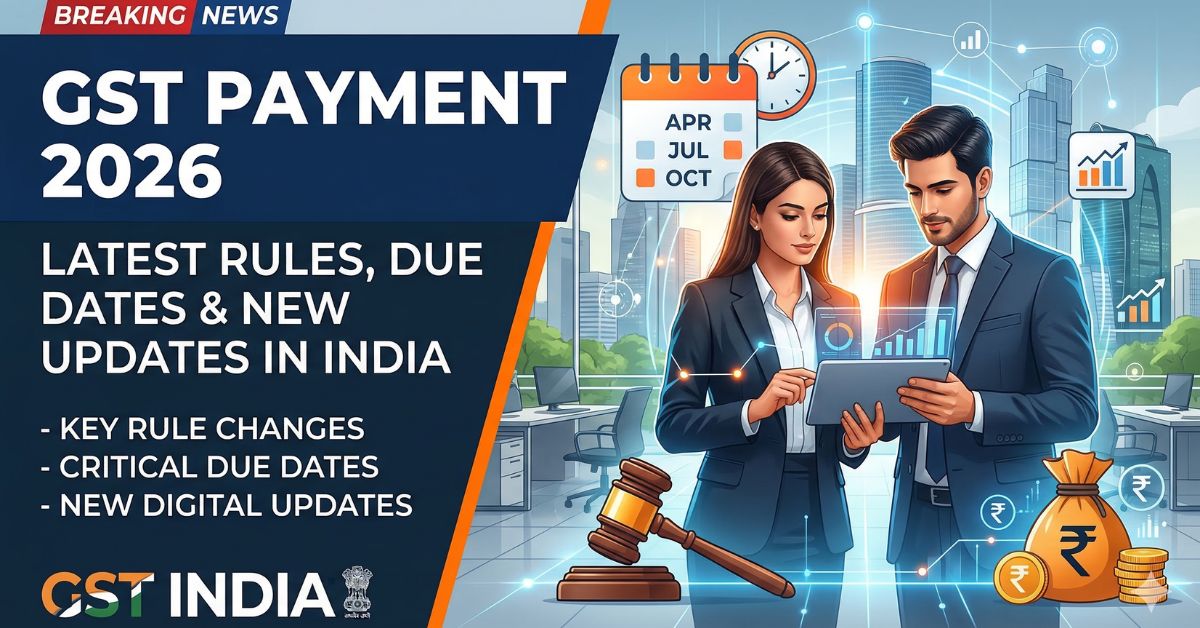
GST payment is one of the most important compliance tasks for businesses in India. Whether you are a small trader, startup, or large company, understanding how GST payment works—and recent updates—can help you avoid penalties and stay compliant.
In this article, we explain the latest GST payment rules, important due dates, recent news updates, and what it means for taxpayers in India in 2026.
What is GST Payment?
GST (Goods and Services Tax) payment is the tax amount that registered businesses must pay to the government after filing their GST returns.
Businesses collect GST from customers and then deposit it with the government after adjusting input tax credit (ITC). This payment is usually done while filing returns like GSTR-3B.
Latest GST Payment News in India (2026)
Recent updates have brought relief and improvements for taxpayers:
- The GST system has introduced a new form DRC-03A to fix issues where taxpayers had to make double payments during appeals.
- Now, payments are properly linked to demand IDs, so duplicate payment problems are reduced.
- Some states are also focusing on improving GST compliance and reducing arrears, showing better tax collection systems.
These updates aim to make GST payment smoother and reduce unnecessary financial burden on businesses.
GST Payment Due Dates (2026)
GST payment deadlines depend on the type of taxpayer and return filed.
Monthly GST Payment (GSTR-3B)
- Due date is usually 20th of the next month
- Example: GST for February 2026 → Due on 20 March 2026
Quarterly Payment (QRMP Scheme)
- Payment is made using PMT-06
- Due date: 25th of the next month after quarter/month
Annual GST Return
- Due date: 31 December following the financial year
Missing these deadlines can result in late fees and interest charges.
Check out more: LPG e-KYC Update 2026
How GST Payment is Made
GST payment is done online through the GST portal. The process includes:
- Filing GST return (GSTR-3B or others)
- Calculating tax liability
- Adjusting input tax credit (ITC)
- Paying remaining tax via:
- Net banking
- NEFT/RTGS
- Debit/credit card
The payment is recorded in the Electronic Cash Ledger.
Key GST Payment Rules in 2026
Several important rules affect how GST payment works:
- GST returns cannot be filed after 3 years of the due date
- ITC claims are restricted after a specific deadline (usually 30 November of next FY)
- GSTR-3B forms are now more strict and less editable after submission
- Multi-factor authentication (MFA) is now required for better security
These changes aim to improve compliance and reduce fraud.
Why GST Payment is Important
GST payment is not just a legal requirement—it also affects business operations:
- Avoids penalties and interest
- Maintains good compliance record
- Helps in smooth input tax credit claims
- Prevents notices or legal issues from tax authorities
Timely payment also improves business credibility.
Impact on Businesses in India
Recent GST updates have both positive and practical impacts:
- Less duplication in payments reduces financial stress
- Improved system linking makes appeals easier
- Strict rules increase compliance pressure, especially for small businesses
- Digital processes are becoming more streamlined but require proper understanding
Overall, businesses must stay updated and maintain proper records.
What Happens If GST Payment is Late?
If GST is not paid on time:
- Interest is charged at 18% per annum
- Late fees are applied
- GST returns may be blocked
- Notices or penalties may be issued
Regular delays can also lead to audits or legal action.
What to Expect Next in GST System
Experts expect further improvements in the GST system:
- Simplified tax structure (possibly fewer tax slabs)
- Better automation in payment and filing
- Faster dispute resolution
- More strict compliance tracking
These steps aim to make GST easier but more disciplined.
FAQs on GST Payment
1. What is the last date for GST payment?
For most businesses, it is the 20th of the next month when filing GSTR-3B.
2. Can GST payment be made after the due date?
Yes, but interest and late fees will be charged.
3. What is PMT-06 in GST?
PMT-06 is used for making tax payments under the QRMP scheme.
4. Is GST payment mandatory even if there is no sales?
Yes, you must file returns. If there is no tax liability, you file a nil return.
5. How can I reduce GST payment?
By correctly claiming input tax credit (ITC) on purchases.