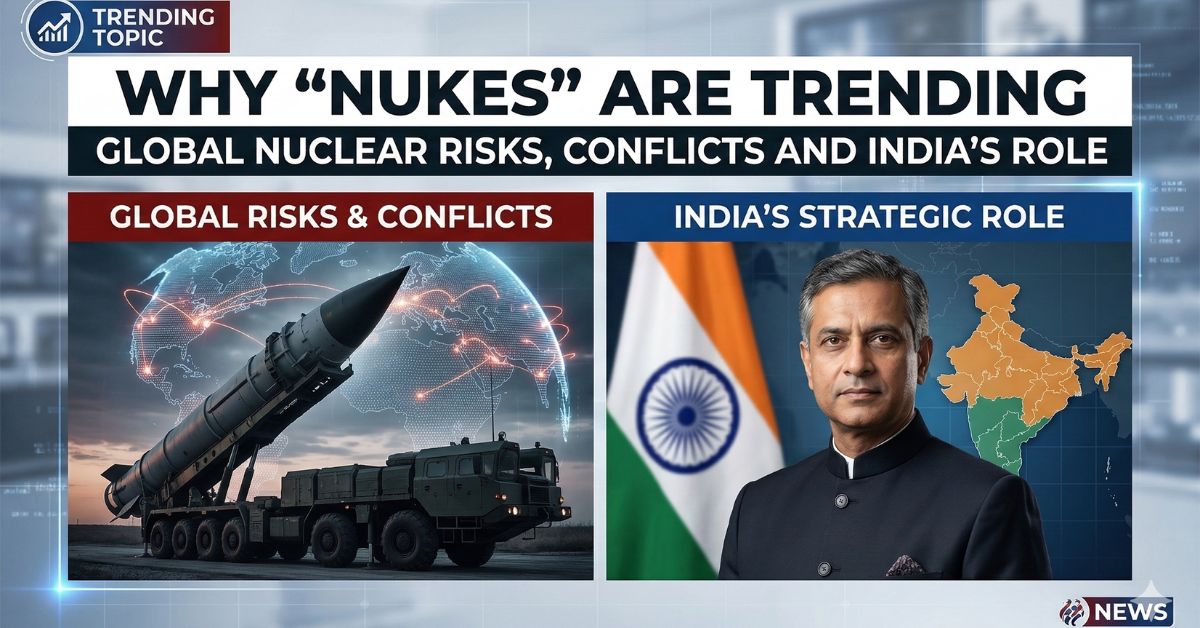
The word “nukes” is trending again in global news and online searches. In recent months, nuclear weapons have returned to the center of international discussions due to rising geopolitical tensions, military conflicts, and the weakening of arms control agreements.
This article explains what “nukes” mean, why they are in the news right now, what is happening globally, and how these developments could affect India and the wider world.
What Are Nukes?
“Nukes” is a common short term for nuclear weapons. These are extremely powerful explosive devices that release energy through nuclear reactions such as fission or fusion. A single nuclear weapon can destroy an entire city within seconds and cause long-term radiation damage.
Nuclear weapons were first used in 1945 during World War II. Since then, several countries have developed them mainly as a deterrent to prevent attacks from other nations.
Today, only nine countries are believed to possess nuclear weapons. These include the United States, Russia, China, India, Pakistan, the United Kingdom, France, North Korea, and Israel.
Why Nukes Are Trending in Global News
Several major developments have pushed nuclear weapons back into headlines.
One of the biggest concerns is the rising tension between major powers. Russia has warned it may respond strongly if European countries host nuclear weapons as part of NATO’s strategy.
At the same time, debates over Iran’s nuclear program and military strikes on suspected nuclear facilities have raised fears of escalation in the Middle East.
Another major issue is the expiration of key nuclear arms control agreements, including the New START treaty between the United States and Russia. Without such agreements, experts fear a new global arms race.
Political rhetoric has also intensified, with some leaders warning about potential nuclear responses in global conflicts.
Growing Risk of a New Nuclear Arms Race
Security experts believe the world may be entering a new nuclear arms race. This means countries could start building more nuclear weapons or modernizing their arsenals.
According to international security reports, the systems that once controlled nuclear weapons growth are weakening. Many countries are upgrading missiles, submarines, and bombers capable of delivering nuclear weapons.
At the same time, diplomatic communication between major nuclear powers has decreased, making global stability more fragile.
How Nuclear Tensions Affect India
India is also part of the global nuclear landscape. It maintains nuclear weapons as part of its strategic deterrence policy. India’s official doctrine is based on two key principles:
- No First Use (NFU) – India says it will not use nuclear weapons unless attacked first with nuclear weapons.
- Credible Minimum Deterrence – maintaining enough nuclear capability to deter enemies.
India is estimated to have around 160 nuclear warheads, although the exact number is not officially confirmed.
India’s nuclear policy is mainly shaped by regional security concerns, especially relations with China and Pakistan.
Why Experts Say the Risk Is Rising
Many global analysts say the risk of nuclear conflict is increasing compared to previous decades.
Several factors contribute to this concern:
- Ongoing conflicts such as the Russia-Ukraine war
- Growing military rivalry between major powers
- Development of new missile and nuclear delivery systems
- Weakening international arms control agreements
Some experts warn that the risk of nuclear weapons being used is now higher than at any time since the Cold War.
Even if nuclear weapons are not used directly, the threat alone can destabilize global politics.
What Could Happen Next
In the coming years, the global community will likely face three key challenges:
- Negotiating new nuclear arms control agreements
- Preventing more countries from developing nuclear weapons
- Reducing tensions between nuclear-armed states
International organizations like the United Nations continue to push for diplomacy and dialogue to reduce nuclear risks.
However, progress will depend on cooperation between major powers.
Why This Topic Matters for the World
Nuclear weapons remain one of the most powerful and dangerous technologies ever created.
Even though they are rarely used, their existence shapes global politics, military strategy, and international diplomacy.
For countries like India, nuclear weapons are part of national security planning. But globally, many experts believe reducing nuclear risks must remain a top priority.
FAQs
What does “nukes” mean?
“Nukes” is a short informal term for nuclear weapons.
Which countries have nuclear weapons?
Nine countries are believed to possess nuclear weapons: the US, Russia, China, India, Pakistan, the UK, France, North Korea, and Israel.
Why are nuclear weapons in the news again?
Rising global tensions, conflicts, and the end of some nuclear arms control treaties have brought the issue back into focus.
Does India have nuclear weapons?
Yes. India maintains nuclear weapons as part of its strategic deterrence policy and follows a “No First Use” doctrine.
Could nuclear weapons be used again?
Experts say the risk exists, but most countries treat nuclear weapons mainly as a deterrent rather than for actual use.