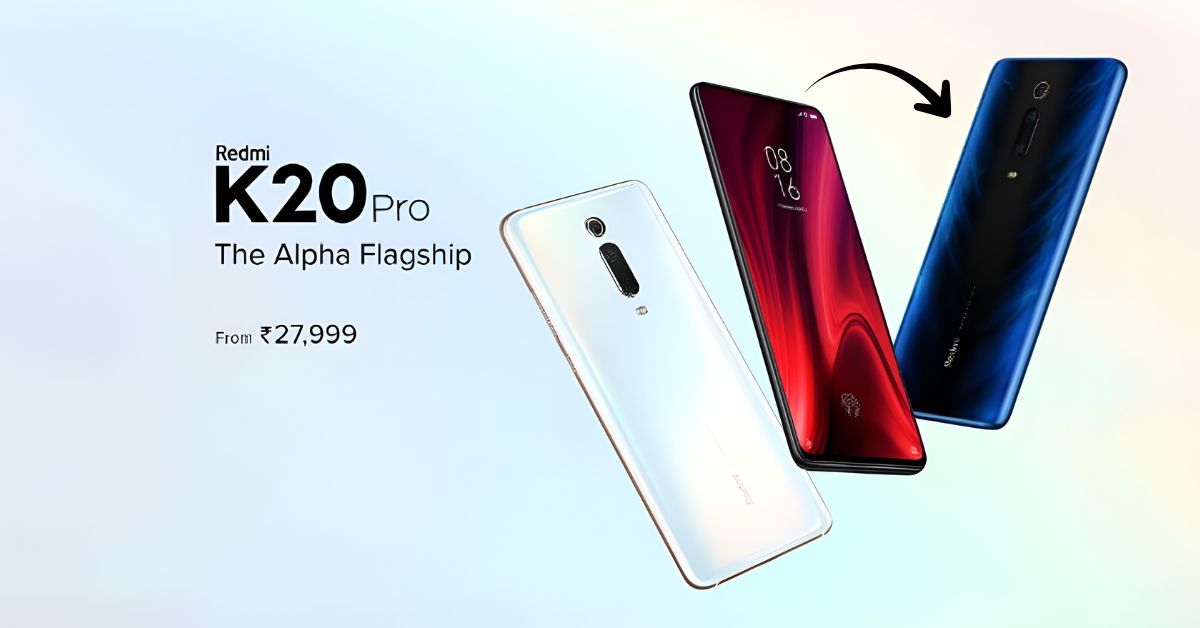
It has been nearly seven years since Xiaomi launched the Redmi K20 Pro in India, yet this legendary smartphone is trending once again in February 2026. In a fast-moving tech world where phones become obsolete in two years, the K20 Pro’s resurgence is a rare phenomenon.
Social media discussions and tech forums in India are currently buzzing with comparisons between the “Alpha Flagship” of 2019 and the newly launched mid-range killers of 2026, such as the Poco F7 and Redmi Note 15 series. Why are Indian users still obsessed with this old 4G device? Here is the complete breakdown of why the Redmi K20 Pro is making headlines today.
The “Pop-Up” Nostalgia: Why It’s Trending Now
The primary reason for this sudden spike in interest is display design. In 2026, almost every smartphone—from budget to ultra-premium—comes with a “punch-hole” camera cutout or a dynamic island on the screen.
The Redmi K20 Pro remains one of the few devices in history to offer a true full-screen experience with no notches or cutouts, thanks to its motorized pop-up selfie camera. Tech enthusiasts are revisiting this design, expressing frustration that modern phones have “regressed” by putting holes in the display. Viral tech videos reviewing “The Best Phones of the Decade” have also reignited this conversation.
Read more: Tecno Pova Curve 2 5G
Redmi K20 Pro vs. 2026 Flagship Killers
A major talking point today is how the Snapdragon 855 processor (used in the K20 Pro) holds up against modern 2026 budget chips. Surprisingly, the K20 Pro still outperforms many entry-level 5G phones available in the ₹12,000–₹15,000 segment today.
- Build Quality: Users are pointing out that the K20 Pro’s premium glass-and-metal sandwich design feels far superior to the plastic builds seen in many 2026 mid-rangers.
- The Comparison: Search trends show a high volume of users comparing the “Redmi K20 Pro” vs. “Poco F7” and “Redmi Note 15”. While the new phones have 5G and better batteries, the K20 Pro wins on aesthetics and raw build quality.
Software Life: HyperOS & Android 16 (Unofficial)
Officially, Xiaomi ended support for the K20 Pro years ago. It is on the “EOS” (End of Support) list and does not receive updates from the company.
However, the third-party developer community in India is keeping this phone alive. Reports indicate that unofficial ports of HyperOS 2.0 and even early builds of Android 16 are being actively developed for the K20 Pro. This has made it a favorite device for tech tinkerers who want to experiment with the latest software without buying a new phone.
The Missing Feature: 5G Connectivity
The biggest drawback preventing a full comeback is the lack of 5G. The Redmi K20 Pro is a 4G-only device. With 5G now fully standard across India (including Jio and Airtel’s advanced networks), using a K20 Pro as a primary daily driver in 2026 is difficult for users who need high-speed data.
Verdict: Should You Buy or Keep One?
If you still own a Redmi K20 Pro in 2026, you are holding a piece of smartphone history. It is worth keeping as a secondary device for media consumption due to its uninterrupted AMOLED screen. However, buying one used is only recommended for collectors or developers, as battery degradation and lack of 5G make it impractical for daily use.
Frequently Asked Questions (FAQs)
Q1: Why is the Redmi K20 Pro trending in 2026?
It is trending due to nostalgia for its pop-up camera (full-screen design) and comparisons with new 2026 phones that lack this premium build.
Q2: Does the Redmi K20 Pro support 5G in India?
No, the Redmi K20 Pro is a 4G-only smartphone. It does not support 5G networks.
Q3: Can I get Android 16 on Redmi K20 Pro?
Officially, no. However, unofficial custom ROMs created by developers may allow you to run newer Android versions like Android 16.
Q4: Is the Redmi K20 Pro good for gaming in 2026?
It is decent for casual gaming, but the Snapdragon 855 is now outdated compared to modern chips for heavy high-graphic games.
Q5: What was the launch price of Redmi K20 Pro in India?
It was launched in 2019 with a starting price of ₹27,999 for the base model.